It’s complicated…
(Spoiler alert – it’s unlikely.)
Many will have seen or heard news reports about Manchester’s £1-a-night tourist tax
From Saturday (1 April) tourists will have to pay a £1 tax to stay in Manchester – the first city in the UK to impose a tourist tax on visitors.
Overnight guests in city centre hotels or holiday apartments will be charged £1 a night, per room, as part of a new scheme which officials hope will raise £3m a year.
Manchester’s £1-a-night tourist tax comes into force | Nazia Parveen | The Guardian | Fri 31 Mar 2023
Manchester has become the first UK city to launch a “tourist tax” for visitors.
The City Visitor Charge will mean people face an extra £1 per room, per night, for their accommodation cost.
The money will be used to help to run large events, conferences, festivals, marketing campaigns and for street cleanliness.
Manchester City Council Chief Executive Joanne Roney said the “innovative initiative” would raise £3m a year to “enhance” visitors’ experience.
It would create “new events and activities for them to enjoy”, she said, adding that the money would be “invested directly into these activities, supporting Manchester’s accommodation sector to protect and create jobs and benefiting the city’s economy as a whole”.
Manchester becomes first UK city to impose ‘tourist tax’ | BBC News England Manchester | Sat 1 Apr 2023
This caused some excitement on Twitter
Councillor Sam Davies (@Sam_in_Cam) Tweeted a link to the Guardian article (above) on 31 March 2023.
Replies included:
- Can Cambridge do this too? – Andrew Jones (@AJ99500818) on 31 March 2023.
- Yes but councillors are reluctant to do it – Timothy Sykes (@timsykes3) on 1 April 2023.
- From what I understand the council does [sic] currently have the legal power to introduce a tourist tax. Would require central legislation and also Cambridge BID. Ofc councillors could lobby for (or against) but do not have the powers as such (not sure if different in other cities) – Councillor Dr Alex Bulat (@alexandrabulat) on 1 April 2023. [Context suggests that Councillor Bullat intended to tweet “does NOT currently have the legal power”]
- Exactly, it’s an obvious funding model. No doubt our overly tangled web of local authorities would all point the finger at each other and claim it’s their problem? – Andrew Jones (@AJ99500818) on 1 April 2023.
“Our overly tangled web of local authorities”? This 👇🏾
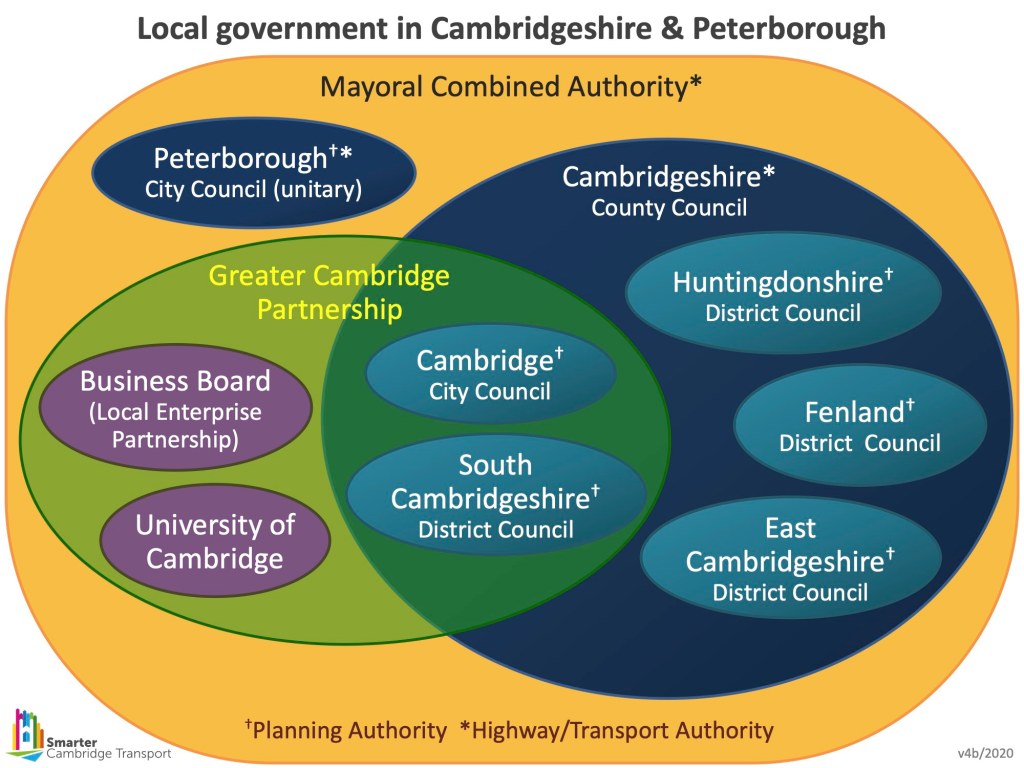
In response, Wendy Blythe, Chair of Federation of Cambridge Residents’ Associations (@greenarteries) on 1 April 2023, tweeted a link to the Video report by ITV News Anglia’s Claire McGlasson, from January 2019.
Could Cambridge be the next council to ask for powers to introduce a tourist tax?
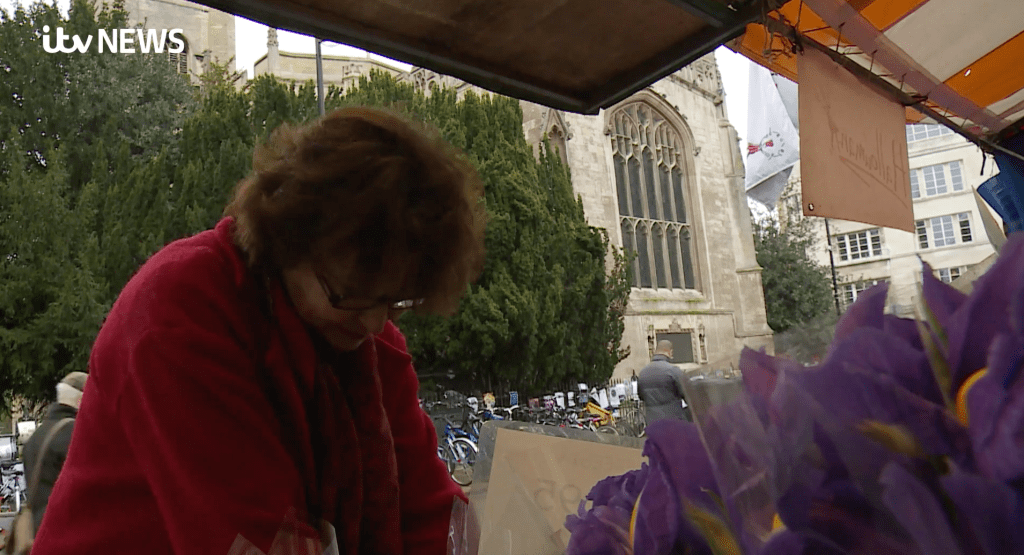
So what powers does Cambridge, or the Greater Cambridge Partnership, or even the Cambridgeshire and Peterborough Combined Authority, have?
Very few, according to this Centre for Cities blog …

After over a decade of austerity, local governments have seen their budgets shrink considerably but have very few fiscal tools to improve them. The main tool they have is council tax, and even the scope to increase this is limited by central government. Given this, is introducing a tourist tax a way to close some of the shortfall?
In Centre for Cities’ recent event in Manchester, Metro Mayor Andy Burnham raised the possibility of introducing a “tourist tax” in the city region.
The problem with this though, is that cities across the UK cannot introduce such a scheme without primary legislation, as local governments currently do not have the power of fiscal devolution to enact their own such taxes.
What could a tourism tax do for city budgets? | Olivia Vera | Centre for Cities | 30 May 2022
Did Manchester Metro Mayor, Andy Burnham, obtain parliamentary legislation?
Er, no. It was, seemingly, a workaround.
[A]ccommodation providers voted to set up the Manchester Accommodation Business Improvement District (ABID).
Some 73 hotels and serviced apartments signed up to the levy scheme which has been introduced ahead of a planned expansion of the hotel and holiday let sector in the city.
Manchester becomes first UK city to impose ‘tourist tax’ | BBC News England Manchester | Sat 1 Apr 2023
Branded the City Visitor Charge, the fee is the first to be introduced in the UK and will help to fund the new Manchester Accommodation Business Improvement District (ABID), which aims to “improve the visitor experience” and “support future growth of the visitor economy” over the next five years.
Manchester’s £1-a-night tourist tax comes into force | Nazia Parveen | The Guardian | Fri 31 Mar 2023
So who are Manchester Accommodation Business Improvement District?
The Manchester Accommodation BID is a ground-breaking new initiative led by the city’s hotel and serviced apartment providers to help create new events and additional activities that will attract more people to visit and stay in Manchester and Salford. It will also contribute to the enhancement of overall guest experience and help to expand the city’s visitor economy by:
- amplifying marketing campaigns that drive overnight stays;
- securing large-scale events, conferences, and festivals in low-season months;
- improving guest welcome and street cleanliness.
The above activities will be funded by the City Visitor Charge; a supplementary £1 Charge per room/unit per night for guests, added to the final accommodation bill. The statutory Charge will be collected from all paid accommodation establishments that fall into the Manchester Accommodation BID zone and will be applicable to all bookings from 1 April 2023.
Manchester Accommodation Business Improvement District website [Current, Accessed 2 April 2023]
Accommodation establishments across Manchester city centre and part of Salford have given resounding support for the establishment of a new Manchester Accommodation Business Improvement District (ABID), following a vote held last month.
The vote marks a significant moment for the city’s accommodation sector and will pave the way to create much-needed additional funding that will be used to improve the visitor experience and support the growth of the visitor economy across the city over the next five years.
Led by the Manchester Hoteliers’ Association in collaboration and partnership with Marketing Manchester, CityCo and both Manchester and Salford City Councils, the Manchester Accommodation BID is a direct response to significant challenges currently facing the accommodation sector in Manchester, including recovery from the pandemic and the impact that Brexit has had on the hospitality sector.
Manchester Accommodation Business Improvement District website [8 Dec 2022, Accessed 2 April 2023]
And in Cambridge (or Greater Cambridge)?
Cui bono?
It is important to recognise that the Manchester Accommodation Business Improvement District was established by, and for the benefit of, paid accommodation establishments in Manchester and Salford, albeit with the support of the local authorities. Moreover, what has been branded a ‘Tourist Tax’ is nothing of the sort; it is a City Visitor Charge. The money is collected by and is under the control of Manchester ABID.
In and around Cambridge, what would hoteliers, serviced apartment providers and the ‘Air BnB’ sector want the money spent on?
Probably not Cambridge’s new large concert hall so longed for by The Cambridge Town Owl (aka Antony Carpen).
Potholes? Cheaper buses? Also unlikely.
Events which could attract staying tourists (not day trippers) such as…?

 Cambridge Area Bus Users