University/Whippet Universal Launch

We posted earlier about the Revised University/Whippet U service from Monday 2nd October.

Here are some details from the launch event at West Hub, JJ Thomson Avenue, Cambridge, CB3 0US, on Friday 29th September 2023.
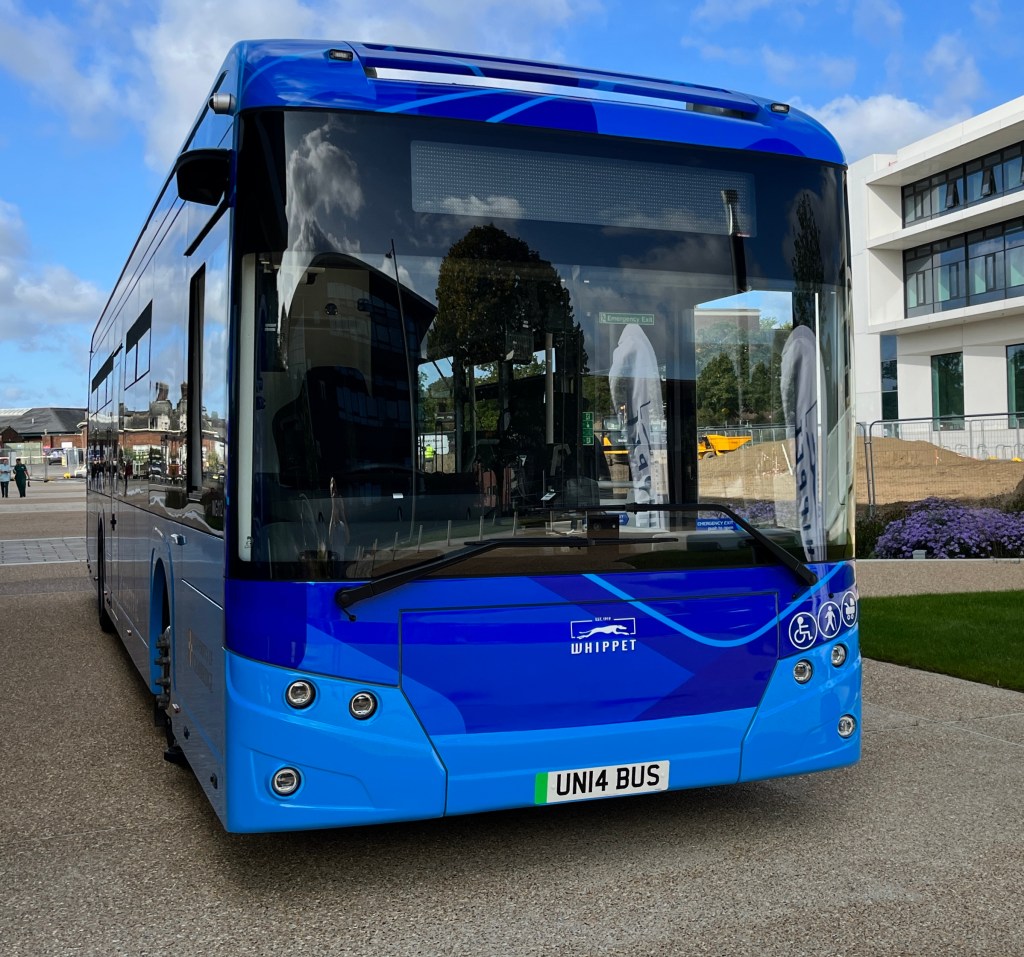
photo as caption
Registration mark UN14BUS
One of the nine Mellor Sigma 12 buses serving the U1/U2 routes
This is one of two with personalised registration marks
Note the cameras which replace traditional exterior mirrors

We don’t intend to duplicate reports from elsewhere, but add a few details about the vehicles and the attention to detail which has gone into the new vehicles and the re-imagined routes.


Reports from the University and the news media, give the overview and key details of the new U1/U2 7-day/week service from Girton Corner to the Cambridge Biomedical Campus. (Yes, the Biomedical Campus is served on Sundays, and Newnham gains a Sunday bus service to the rail station and the Biomedical Campus.)


From the new Whippet Bus website:


Some details of the newly-agreed eight-year contract:


The nine Mellor Sigma 12 buses – designed, engineered and fitted out in the UK – have two wheelchair/buggy bays (each with three tip-up seats for when not fully occupied by wheelchairs or child buggies) and ten highly-accessible, fixed, high-back seats on the low-floor section, forward of the raised area to the rear, under which some of the batteries are housed.
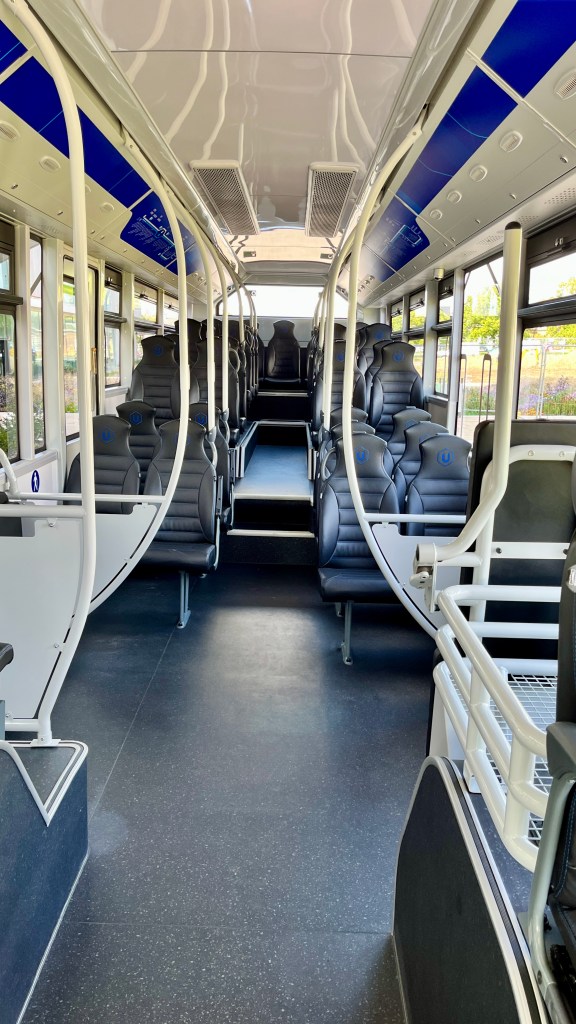
photo as caption
Interior of one of the Mellor Sigma 12 vehicles showing ten highly-accessible, fixed, high-back seats on the low-floor section, forward of the raised area

Above the front wheel arches are three slightly-wider single seats designed to accommodate a parent with a small child.
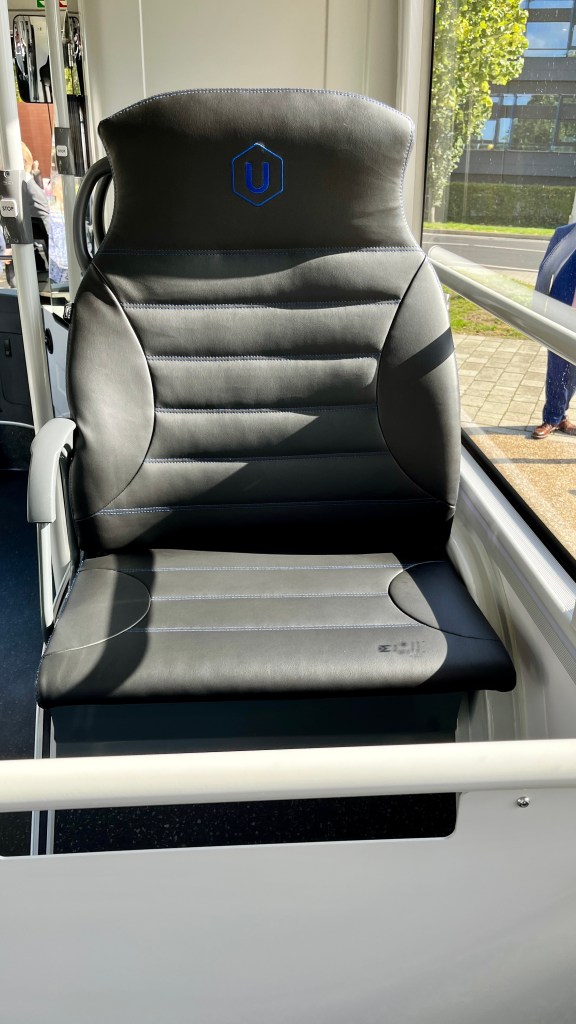
photo as caption
One of the three slightly-wider single seats designed to accommodate a parent with a small child

Smartphone getting low on its charge? The University, Whippet and Mellor have the solution…
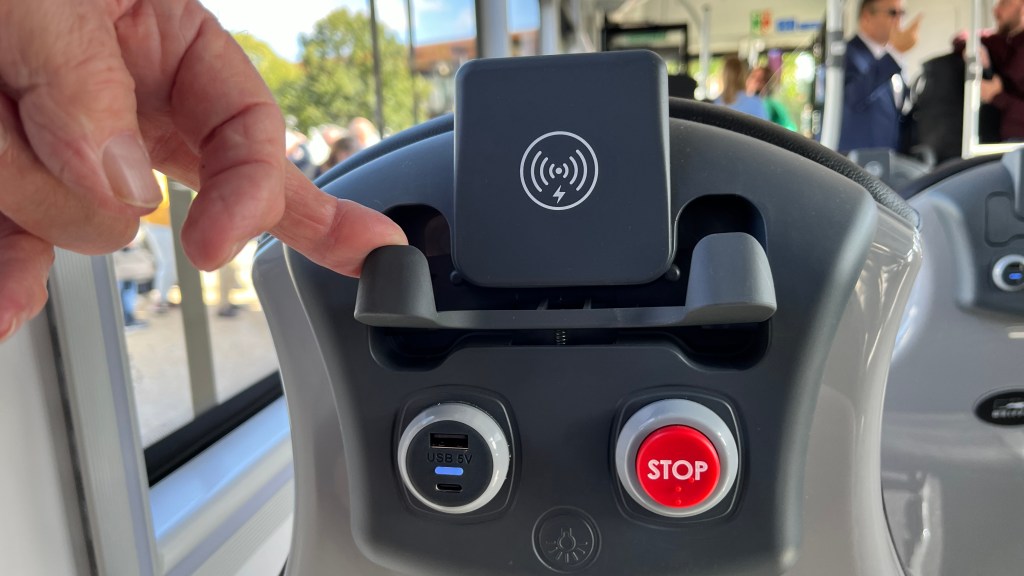
photo as caption
You can charge up wirelessly, or with your USB-A or USB-C cable
Note, also, the STOP button on the seat-back and the button for the reading lamp

Passengers benefit from clear audio-visual announcements for the direction of travel (eg ‘Towards Girton Corner’) and the next stop, comfortable high-backed seats (ten of which are accessible on the low-floor section), two wheelchair/buggy bays, multi-way phone charging, a STOP button on every seat-back, and even a reading-lamp to help decipher those all-important marginalia.

Drivers have the benefits of external cameras at the front (replacing traditional mirrors) and at the rear, an AI-assisted hazard detection system, fully adjustable driving-seat, steering wheel and a dashboard which adjusts with the wheel.


Find out more about Rochdale-based Mellor here. The Mellor Sigma (∑) range can be browsed here. View/download the ∑ brochure here.


The enhanced audio-visual announcements mentioned above are only part of the mission to remove anxiety from bus travel. The installation of seat-back STOP buttons in addition to more traditionally-located buttons help those with hidden disabilities. But these features are only part of the integrated mission.

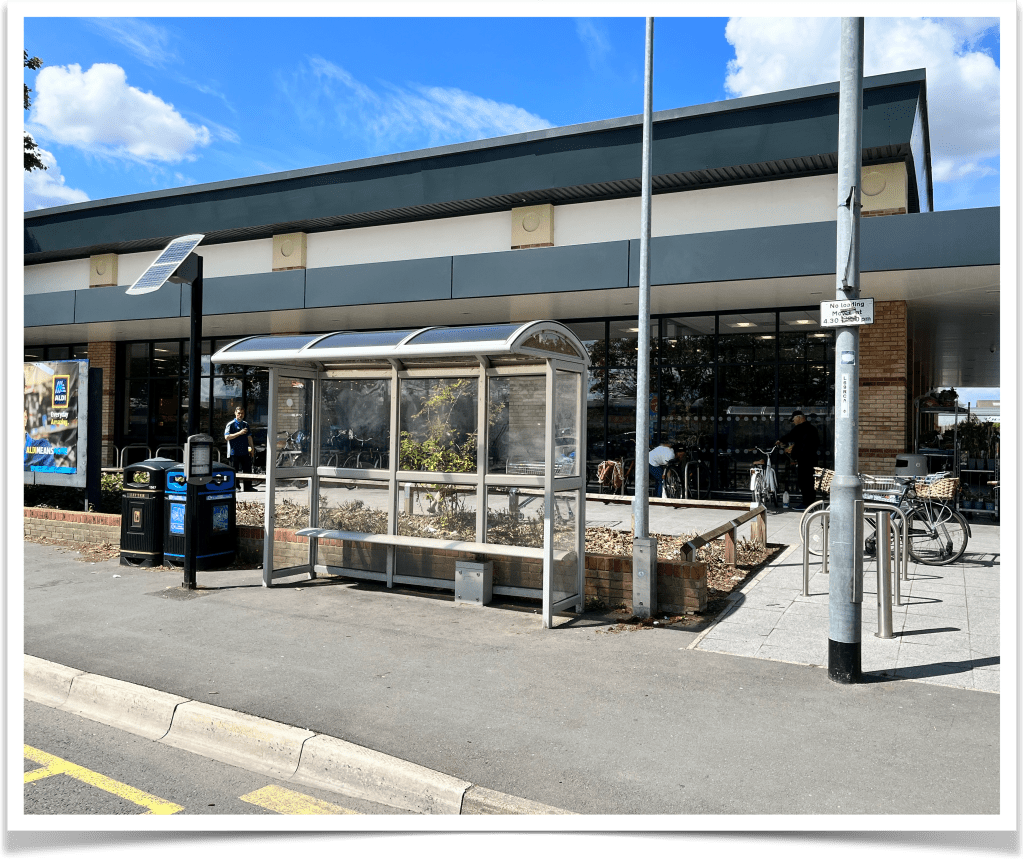
Photo of West Hub bus stop, showing features listed in following paragraph
West Hub bus stop, towards Cambridge Biomedical Campus

All stops have been updated with a printed timetable in a weatherproof case, and a bus stop flag which shows the direction of travel. Wherever possible, bus stops have many more passenger-friendly features.

The West Hub bus stop shown in the foregoing photograph, has a shelter with integrated seating, good hard-standing, a printed timetable in a weatherproof case, e-paper real-time passenger information, and gives easy access to the bus for wheelchair users. The bus stop flag reads ‘towards city centre, rail station & Biomedical Campus’.

This stop fulfils all of the criteria for quality Bus stop infrastructure in our joint briefing paper with Living Streets, Cambridge.


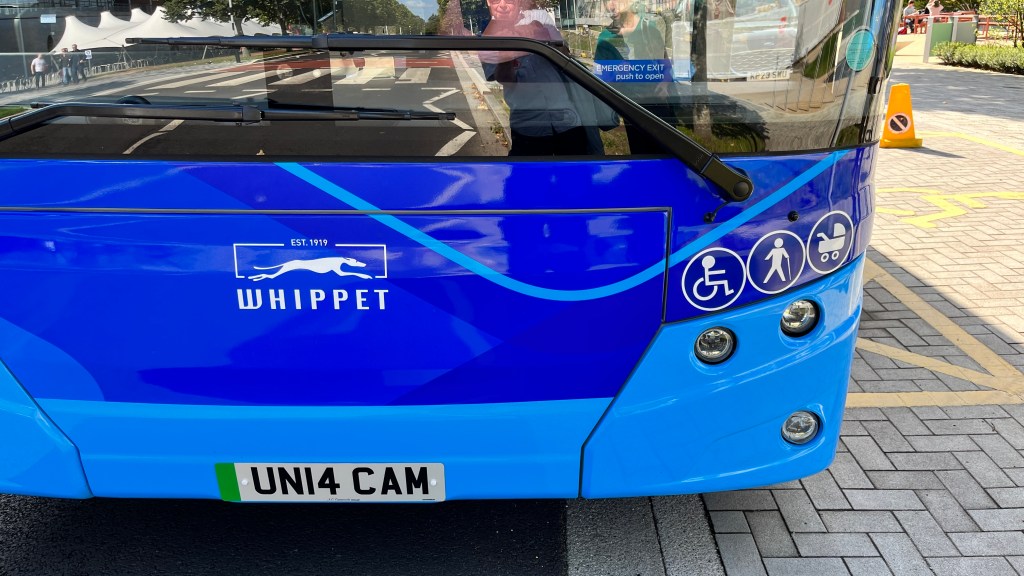
photo as caption
Registration mark UN14CAM
The other of the two vehicles with personalised registration marks

Recently, Roger French OBE DL MA, BusAndTrainUser, visited Whippet as part of his fortnightly A to Z of bus and train companies. Read the blogpost here: W is for Whippet.

More on the Universal contract…
Cambridge Universal service shows bus collaboration possibilities By Tim Deakin, RouteOne October 16, 2023


This post is open for (polite) comments.

Bus stop infrastructure

logos of Cambridge Area Bus Users and Living Streets Cambridge
Click the logos above to view down load the joint position paper

With thanks for advice from member groups of Cambridgeshire Sustainable Travel Alliance, including Camcycle


Too much bus stop infrastructure is poorly designed for queueing, boarding and alighting, especially disadvantaging passengers using wheelchairs, walking-aids, and parents with buggies.

Cambridge Area Bus Users has received numerous complaints about bus stop islands (‘floating’ bus stops). Some members are of the view that this type of bus stop should not be installed. However, as with all highway infrastructure, there are good examples and poor examples. (Unfortunately, we are still looking for a good example of a bus stop island in or around Cambridge.) And, just to scotch an ugly little rumour, the design and implementation of bus stop islands is not overseen by Camcycle. (We would like to know who does oversee the design and implementation of bus top infrastructure.) Poor design of bus stop islands creates problems for cyclists, bus passengers, and pedestrians alike, but particularly disadvantages people with disabilities.

And sub-standard bus stop infrastructure is prevalent in traditional stops, too.

But let’s start on a positive note, with some good-quality, recently-installed bus stop infrastructure.


Stanley Road (outbound) 0500CCITY165 (outside Aldi, Newmarket Road, Cambridge)

Good points

  • The shelter, with integral seating, is set back at the edge of the highway boundary.
  • A bus stop flag has been mounted on an adjacent street-lighting column.
  • RTPI, of e-paper type, is installed close to the shelter at the upstream end.
  • There are no obstructions for passengers boarding/alighting.
  • Well-sited litter bins do not obstruct pedestrians.
  • Overall installation gives good access to accommodate a ‘reference wheelchair’ (DfT guidance) of 1.20 m length and deploying the associated 1.20 m manually-extended bus-mounted wheelchair ramp.

Point for improvement

  • There should be a lockable case for printed route/timetable information.

Napier Street (outbound) 0500CCITY102 (Newmarket Road , Cambridge)

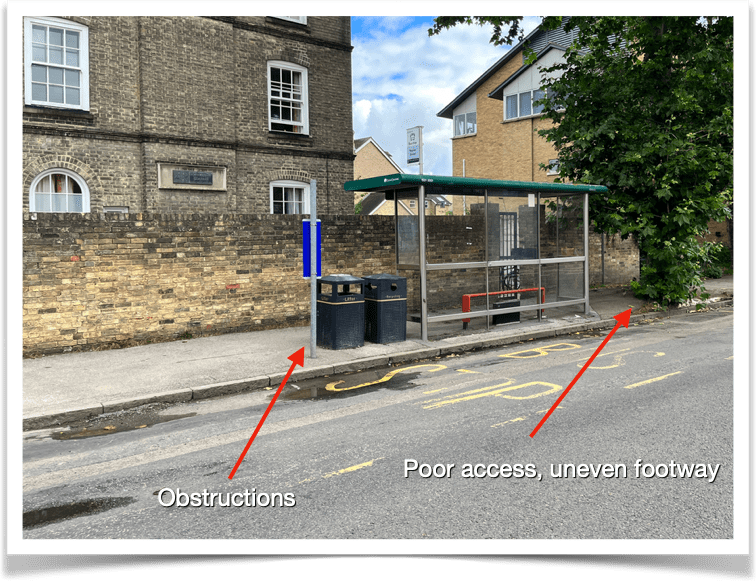
Photo of Napier Street, Cambridge (outbound) 0500CCITY102
Details in subsequent text

Deficient points

  • The shelter is adjacent to the bus stop carriageway-markings. However boarding from the downstream end would be difficult because of a nearby tree, which ‘bushes’ near its base in the growing season.
  • At the upstream end of the shelter boarding/alighting is obstructed by a litter bin, a recycling bin and a redundant bus stop pole with no flag.
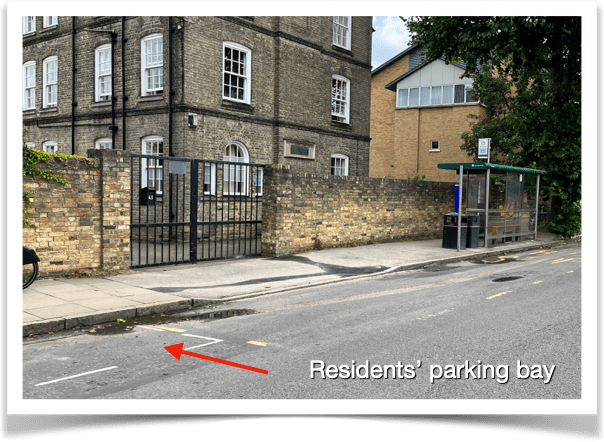
  • A nearby residents’ parking bay, upstream, prevents buses pulling in close to and parallel to the kerb, creating difficulties for boarding, especially for users of walking aids and wheelchairs.

Good points

  • A shelter with integral seating is provided.
  • Siting of the RTPI display is integral at the upstream end of the shelter.
  • There is a bus stop flag affixed to the upstream end of the shelter.
  • A lockable case for printed route/timetable information is provided.

Union Lane (inbound) 0500CCITY083 (Milton Road, Cambridge

Good points

  • A shelter, with integral seating, is provided, at the downstream end of the island.
  • The shelter has an integral pole and bus stop flag at the upstream end.
  • A lockable case for printed route/timetable information is provided.
  • Hopefully RTPI will be installed.

Deficient points

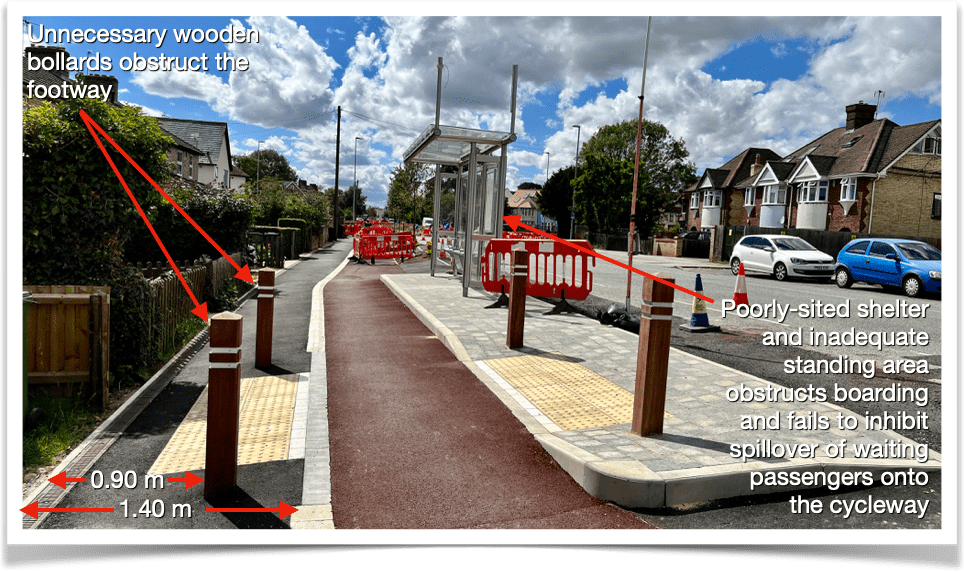
  • The width of the island is inadequate at 2.05 m. A user of a ‘reference wheelchair’ (DfT guidance) of 1.20 m length, mounting a 1.20 m manually-extended wheelchair ramp would need to reverse by approximately 0.50 m into the cycleway creating a collision hazard with cyclists.
  • Siting of the shelter, with its wall close to the carriageway, set-back approximately 0.50 m, unnecessarily restricts access to buses.
  • The distance, from the wall of shelter to the cycle lane, at 0.95 m, is inadequate and could lead to pedestrian spillover onto the cycleway at busy times.
  • The wall of the shelter should back onto the cycle track, not the carriageway, to facilitate boarding and to inhibit spillover of waiting passengers onto the cycleway at busy times.
  • The recommended 2.00 m unobstructed width of footway is not met, being only 1.40 m (where not obstructed by street furniture).
  • Unnecessary wooden bollards obstruct the footway and bus stop island, further reducing footway width from 1.40 m to 0.90 m.

Read on, or download the Joint position paper from Cambridge Area Bus Users and Living Streets Cambridge PDF here.


  • There should be hard-standing of sufficient area to accommodate queuing passengers and a minimum width (kerb-to highway boundary) of 2.50 m to accommodate a ‘reference wheelchair’ (DfT guidance) of 1.20 m length and the associated 1.20 m manually-extended bus-mounted wheelchair ramp to be deployed.
  • Where the hard-standing is not part of, or adjacent to a footway, it should be connected to a footway by a hard-surfaced path.
  • Shelters with integral seating should be provided wherever possible.
  • Kerb-adjacent shelters should be sited downstream from bus stop carriageway-markings, enabling queueing passengers to face the oncoming bus.
  • A bus stop flag should be fixed to the upstream end of the shelter to clarify where the boarding doors will be positioned.
  • For shelters set back at the edge of the highway boundary (eg close to a private wall) the foregoing two points are less essential.
  • There should be a lockable case for printed route/timetable information.
  • There should be no obstructions (eg litter bins, legacy bus-stop poles) for passengers boarding/alighting.
  • RTPI, of e-paper type, should ideally be installed in the shelter at the upstream end. Overhead displays should be integrally-mounted at the upstream end of the shelter, or pole-mounted around 2.50 m upstream from the shelter, for ease of visibility and to avoid boarding/alighting obstruction.
  • No other street furniture (eg lighting columns, litter bins) should be sited near the kerb-edge closer than 2.50 m from the boarding/alighting point. 
  • Consideration should be given to the length of the bus stop carriageway markings, especially upstream of the boarding/alighting point to reduce the likelihood of obstruction by other vehicles and to facilitate simultaneous stopping of two buses on frequent services.
  • Bus operators should be consulted, at the earliest opportunity, on the proposed location of stops, their design and siting.

In addition to the above principles concerning infrastructure siting and design, our groups believe that the following principles should apply.


  • Design and siting characteristics should give consideration for those with a visual impairment, for all those with mobility impairments and for passengers with prams/pushchairs/buggies or those carrying heavy luggage.
  • Consultations should take place at the earliest possible stage between the Greater Cambridge Partnership, the Highway authority, bus operators and groups representing those with visual, mobility, hearing or cognitive impairment who may be most at risk when crossing a cycle path to access the bus stop.
  • Footway amenity should not be adversely affected by the installation of a bus stop bypass; 2.00 m unobstructed width of footway should be retained.
  • The passenger crossing-point should be clearly identified with blister tactile paving.
  • The crossing should have a contrasting surface delineated with either ‘Zebra’ stripes or ‘Pelican’-style dashed lines, be on a raised table, providing a level surface for bus passengers/pedestrians and those in wheelchairs to access the island, on the main identified pedestrian desire-line.
  • The cycle-track should rise to footway level on the approach to the crossing-point, through a smooth vertical change.
  • Other measures to encourage cyclists to reduce speed and to encourage courtesy from cyclists on the approach to the crossing-point should be incorporated, including on-cycleway markings and, possibly, a narrowing of the cycle track. However this should not compromise provision for non-standard cycles (eg ‘cargo’ bikes/trikes).
  • Sufficient space for a 1.20 m manually-extended wheelchair ramp to be deployed and for users of a ‘reference wheelchair’ (DfT guidance) of 1.20 m length to safely manoeuvre requires a minimum 2.50 m width for the island.
  • Good inter-visibility between cyclists and bus passengers must be achieved.
  • The wall of the shelter should back onto the cycle track, not the carriageway, to facilitate boarding and to inhibit spillover of waiting passengers onto the cycleway.
  • Any bus stop shelter advertising and information panels should be parallel to the carriageway and cycle track.
  • All other features of the shelter design should avoid blocking of sight lines.

[Note: Many of these points are drawn from Accessible bus stop design guidance, Public Transport Team, Surface Strategy & Planning, Transport for London.]


Text comments can be left in the comment box below.

If you would like to send us photographs, please email Cambridge Area Bus Users, after making your comment. Please attach photos (not documents into which photos have been inserted) and let us know which stop they show and to which comment they refer.