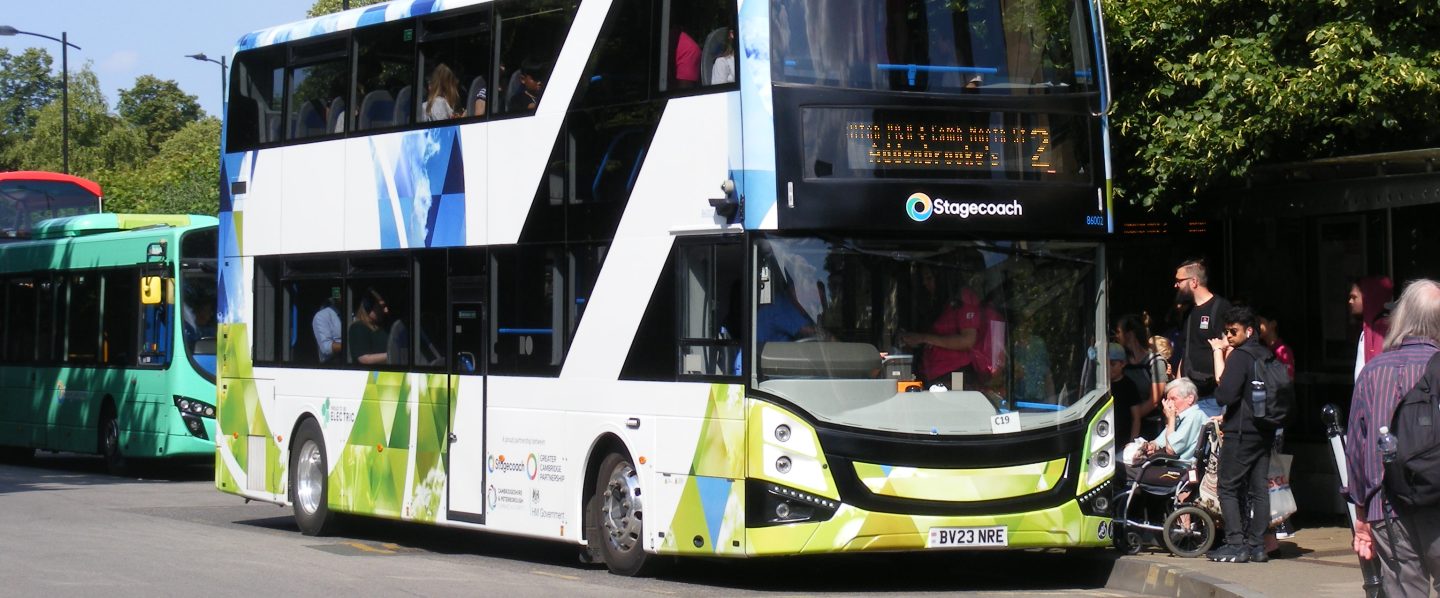
As readers might have guessed, this is not the Daily Mail headline, which read…
EXCLUSIVE Britain’s e-bus ticking timebomb: How nearly TWO THOUSAND electric buses worth £800m face urgent recall over fears they could see burst into flames
If you really wish to read the inaccurate, misleading nonsense from Darren Boyle (2 March 2024) in the Daily Mail click here.
If you’d rather check out facts, then click through to this on-line government publication: Investigation into bus fires reported to DVSA from 2020 to 2022, DVSA, 20 July 2023
RouteOne a trade publication, gave a balanced report Fix for potential BYD ADL battery-electric bus recall ‘in hand’ in which they remarked upon…
… a hysterical report in the Daily Mail claiming uncited fears that affected buses “could see [sic] burst into flames.”
op cit, routeone Team, March 6, 2024
…
The Mail also quoted FairFuelUK founder and Reform UK candidate for the London mayoral election Howard Cox as claiming that taxpayers will “have to fund these expensive buses being taken off the road.”
And the facts?
Alexander Dennis has issued a safety bulletin to operators of BYD ADL Enviro200EV and Enviro400EV battery-electric buses in relation to a potential recall issue around the heating, ventilation and air-conditioning (HVAC) systems in some of those vehicles.
ibid
…
An under-development permanent fix will be introduced to deal with the problem. DVSA’s recall listing service shows that it affects 1,758 buses produced by the BYD Alexander Dennis partnership. In the meantime, operators have been advised to ensure that the Hispacold HVAC system is switched off when those vehicles are left unattended.
So which of Cambridge’s e-buses are affected?
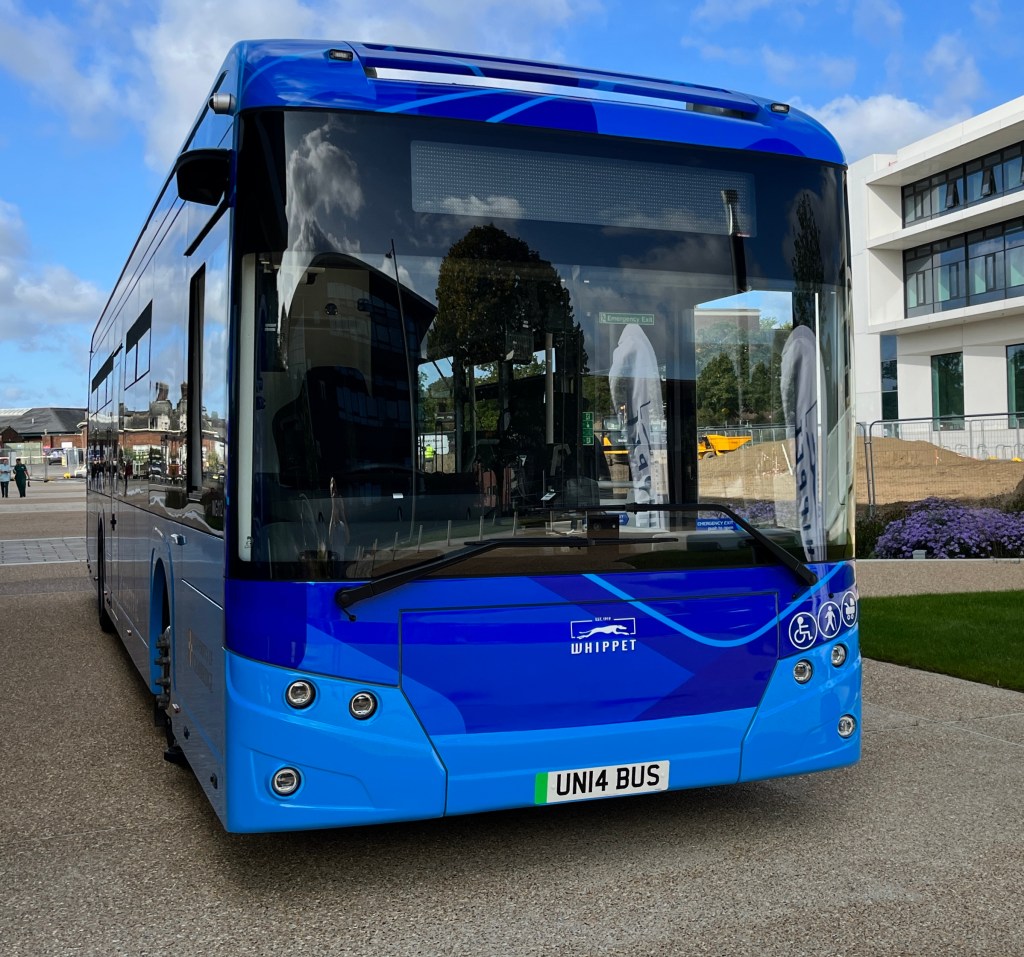
Not these nine…
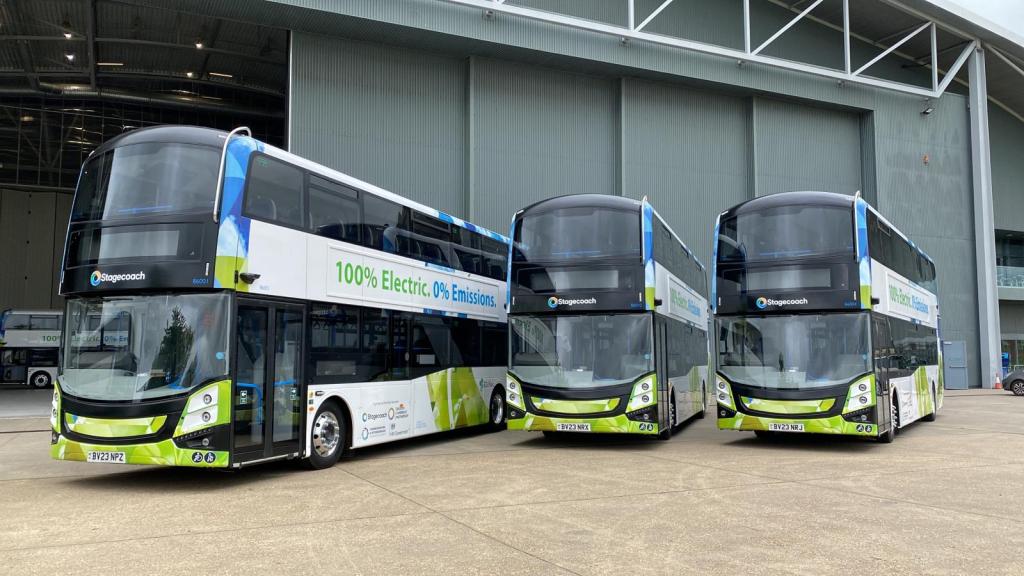
Nor these thirty…
So, which? And how many?
Just these two…
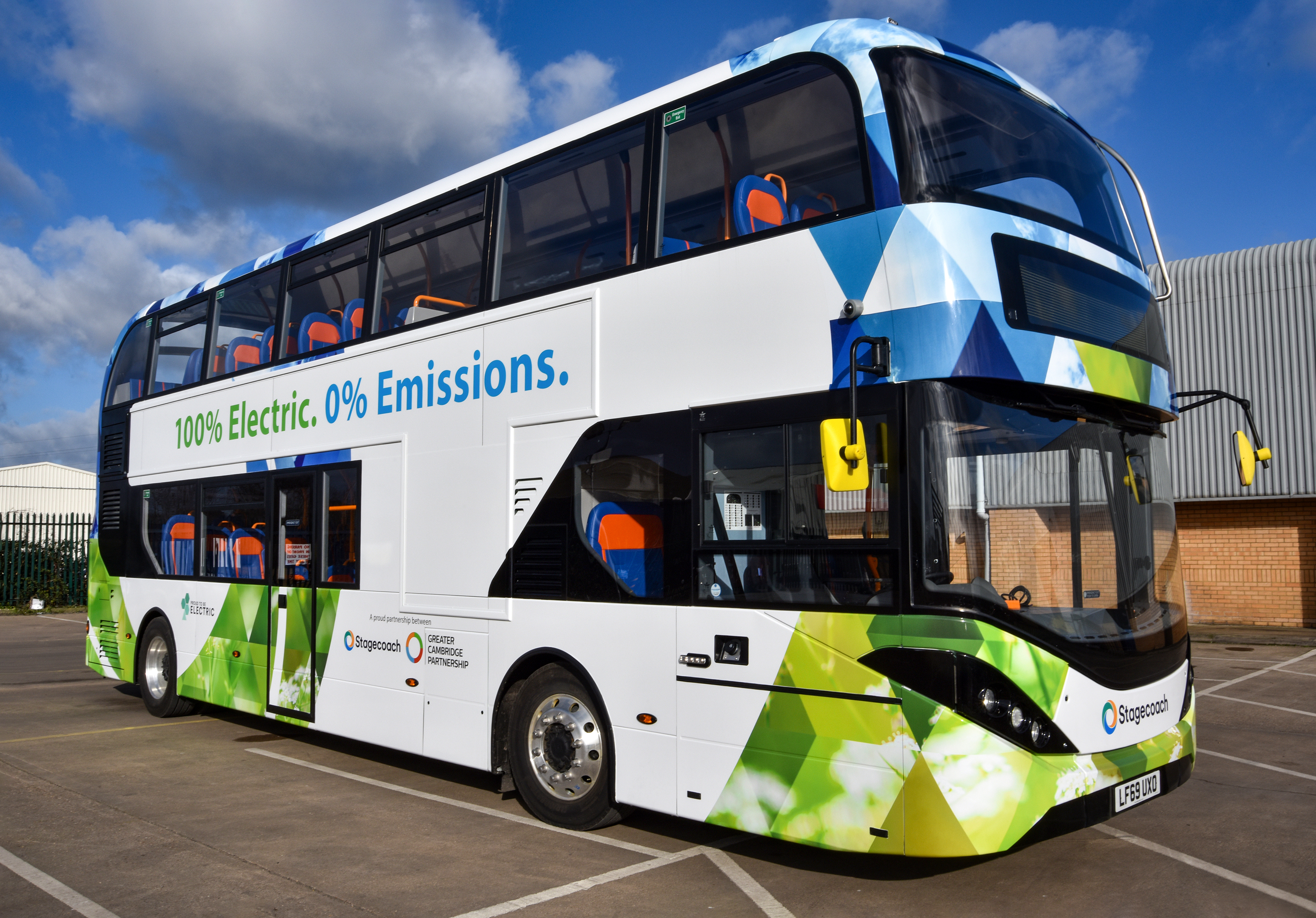
Just these two. ⬆︎ The Alexander Dennis electric double deckers supplied to Stagecoach East for a project between the operator and the Greater Cambridge Partnership, supporting an improvement in air quality in the city centre of Cambridge and giving the opportunity to inform potential future investment in a zero emission bus fleet.
So, these two EXPENSIVE BUSES bought with PUBLIC MONEY are going to be off the road over fears they could burst into flames?
Err… No. Stagecoach drivers and mechanics will ensure that the Hispacold HVAC system is switched off when these vehicles are left unattended, pending a permanent fix from manufacturers ADL.
This puts us in mind of…
There was no wrecks and nobody drownded
Stanley Holloway – The Lion And Albert (George Marriott Edgar)
‘Fact, nothin’ to laugh at at all!


In regard to your first point, Margaret, the linked ‘Investigation into bus fires reported to DVSA from 2020 to 2022’ is worth a read through.
In section 2 we read
“Electrical faults: Where the cause of fire was due to cables which may have chafed, cables overloaded or associated fitment errors.” A total of 38 faults one for years.
Given the lower vibrations inherent in e-buses such faults are likely to be rarer.
“5. Casualties and injuries resulting from bus fires
“When a bus is pictured or filmed on fire, the impression given might be one of grave danger to passengers due to the intensity. It’s more likely that passengers and people have been safely evacuated long before the extreme intensity of a fire has been reached.
“From the reports to DVSA during this study, there have not been any reported fire incidents that have resulted in injuries to passengers or others.
“It’s reasonable to conclude that the design of a bus allows for a safe evacuation in the event of an accident or fire.”
There is also an established programme of replacement of e-vehicle batteries, with the old batteries still being highly suitable for domestic/office/shop storage.
As for your second point about lower-deck seating in the low-floor area, this is an issue. It’s a difficult balance, providing an additional wheelchair bay. The industry view is that, as battery and electric drive-chain technology improves, later generations of double-deckers will require less space for battery storage.
Note that this does not apply to the Whippet single deckers, which have some batteries at floor level, some at roof level.
LikeLike
I’m not as confident as the author of this piece appears to be. ‘Just give it a few more years, until the batteries are a bit older’ I am thinking. As well as the potential problem of fire, these buses have so much space taken up by the enormous heavy batteries that there are very few seats on the ground floor. Even of those ground floor seats the majority require the passenger to climb up into them. I see old people with walking sticks standing rather than negotiate the climb. And the most accessible seats are often occupied by the fit and young. The buses were designed to prioritise ‘green’ issues over the needs of people with disabilities and physical infirmity of any kind. Did the people who commissioned these buses bother to find out how much seating was needed for people with reduced mobility?
LikeLike