Greater Cambridge Growth: Planning for Bus Services

Cambridge Area Bus Users was particularly concerned about Policy I/ST – Sustainable Transport and connectivity. In our view this policy is ineffective in ensuring that new developments are highly permeable by buses.


(Note: Greater Cambridge Shared Plannning is the Shared Planning Service between Cambridge City Council and South Cambridgeshire District Council. It is not the same body as Greater Cambridge Partnership which is the delivery body for the devolved City Deal signed in 2014)


Our PDF – New Developments – street layout for efficient bus operation – is based on our response to the Greater Cambridge Local Plan. It draws heavily on advice contained in two publications:

Below are some excerpts from our supporting evidence.


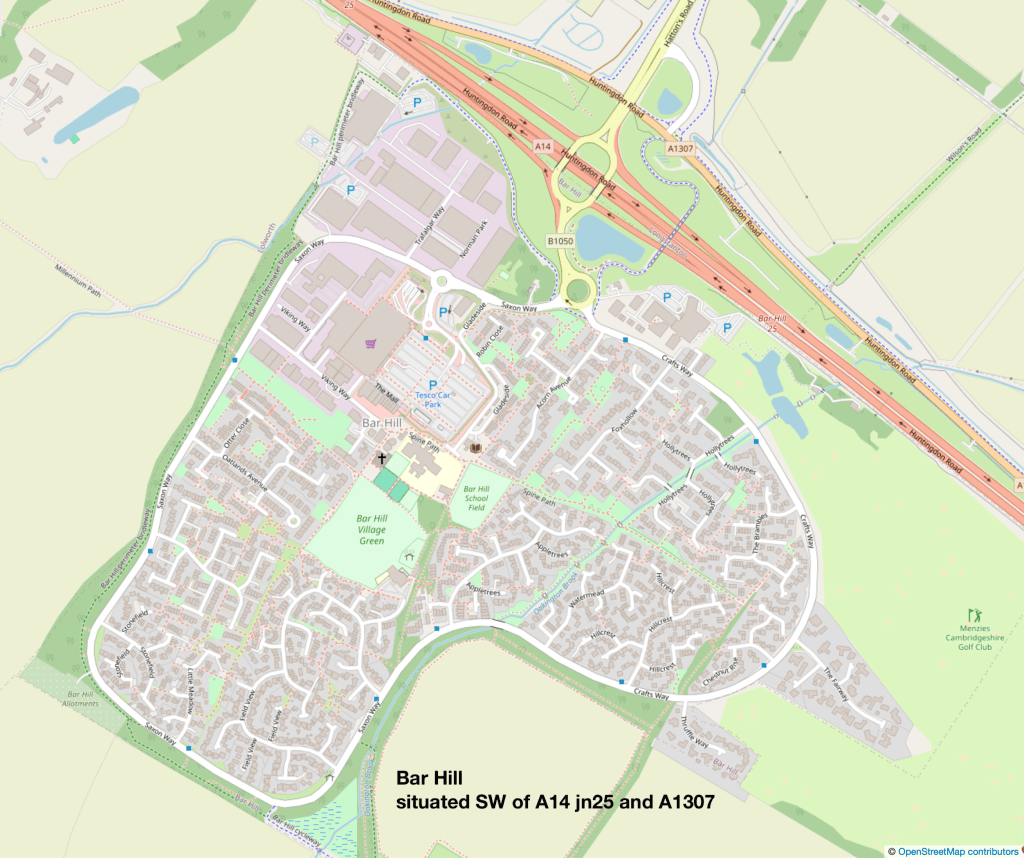
Map of Bar Hill

Bar Hill, established in the 1960s, SW of what was, at the time, the A604 Cambridge – Huntingdon road was a missed opportunity for bus permeability. In particular the possibility of being served by attractive, fast, Cambridge – Bar Hill – Huntingdon services, was lost as a result of the car-centric layout of an orbital distributor road with residential culs-de-sacs. This imposes an unattractive, loop service on the bus operator, with a time penalty of around 10 minutes to access, loop and exit the settlement. Albeit there is a network of footways throughout the village, to encourage active travel, the highway layout is fundamentally flawed in failing to plan for attractive bus services.

Construction of Cambourne, situated south of the A428 and east of the A1198, began in June 1998, with the first house occupied in August 1999. The road layout exemplifies the gratuitous curves and tight bends with poor visibility which should be avoided in planning for bus permeability in new developments.
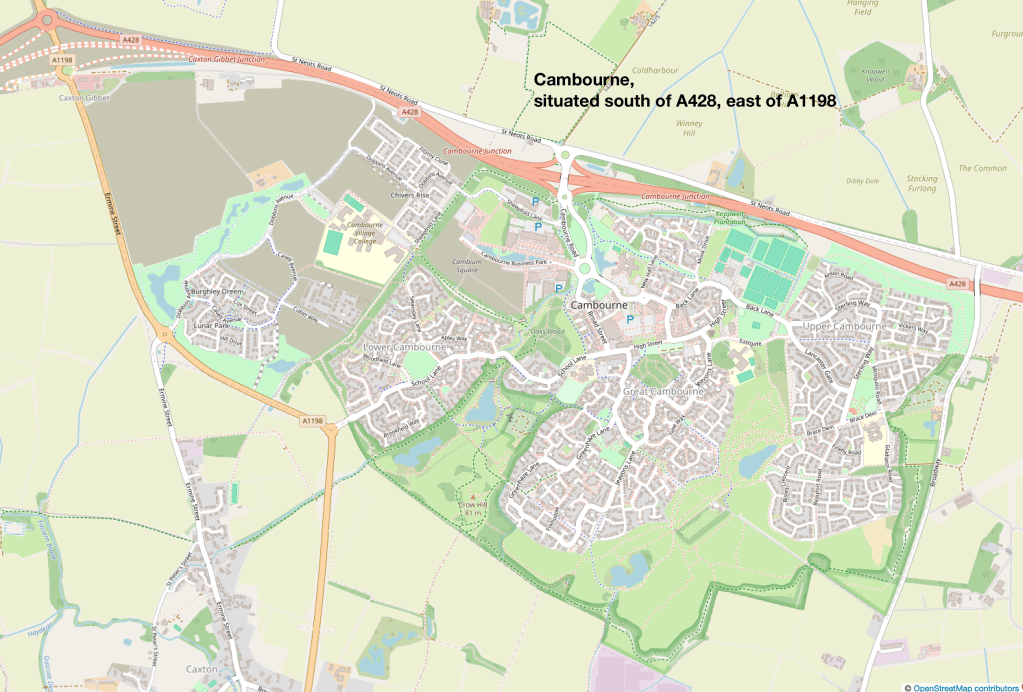
Map of Cambourne

With only northern (A428) and western (A1198) entry/egress to the ‘super village’, Stagecoach East’s service 4 must follow a difficult and indirect pair of loops, to serve Great Cambourne and Upper Cambourne, as shown on the route map, below.
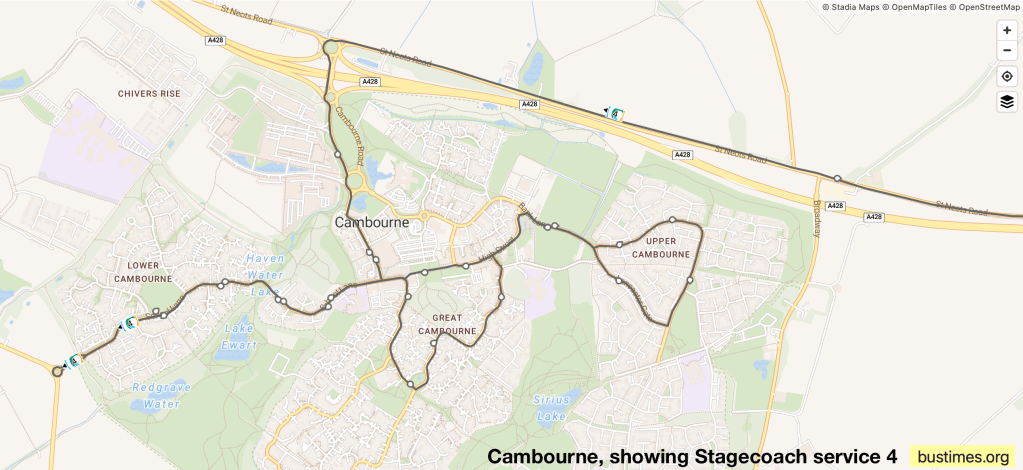
Map of Cambourne, showing route of Stagecoach citi 4

Passengers travelling to/from Cambridge thus have much slower services because of the lack of planning for any direct, east-west bus priority route through the settlement. The time penalty disadvantage of the sub-optimal nature of bus route 4 further imposes costs on the bus operator, threatening the sustainability of the service. Furthermore, the southernmost parts of the settlement are not served by buses, leaving residences in Jeavons Lane and Whittle Way some considerable distance (600m – 800m) from the nearest bus stop.

Additionally, the smooth operation of Stagecoach’s route 4 and the two through services – Whippet’s routes 18 and X3 – are hampered by the gratuitous curves, tight bends and poorly regulated car parking on the shared section along School Lane and Broad Street.


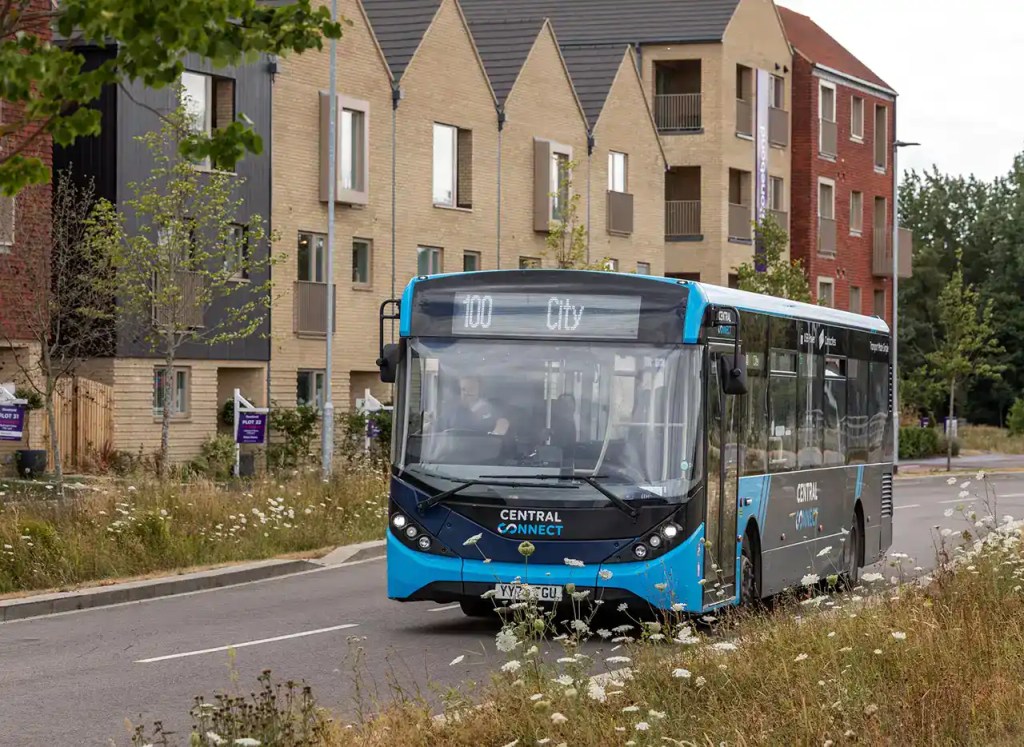
central-connect-bus-service-waterbeach

The Waterbeach new town development of around 11,000 homes, being built on the site of the former Waterbeach Barracks and Airfield, has been designed to prioritise active travel and public transport from the start. The western sector of the development is led by Urban&Civic as the master developer and has included a Sustainable Travel Hub, installed ready for the arrival of the first residents, and an initially half-hourly shuttle bus service connecting to Waterbeach Station, the Science Park, and Cambridge city centre [Waterbeach website: Connections]. Phase 2 will include a “bus only main link” through the site, connecting destinations including schools, a health facility and a new town centre [Waterbeach website, news blog, 19 May 2026].


For the full details of our submission see – New Developments – street layout for efficient bus operation – which is based on our response to the Greater Cambridge Local Plan.

For more on the Cambridgeshire Sustainable Travel Alliance’s objections see: Travel Alliance’s objections to the Local Plan.
Combined Authority Must Invest in Improved Bus Services


Cambridgeshire and Peterborough Combined Authority is holding an additional bus franchising consultation. Changes to how buses would be brought under local control are proposed, in large part as a consequence of Mayor Paul Bristow’s decision to freeze the Mayoral precept (the portion of council tax the Mayor levies). The Travel Alliance urges you to respond to the consultation questionnaire calling for increased investment by the Combined Authority in buses and an expanded public transport network.

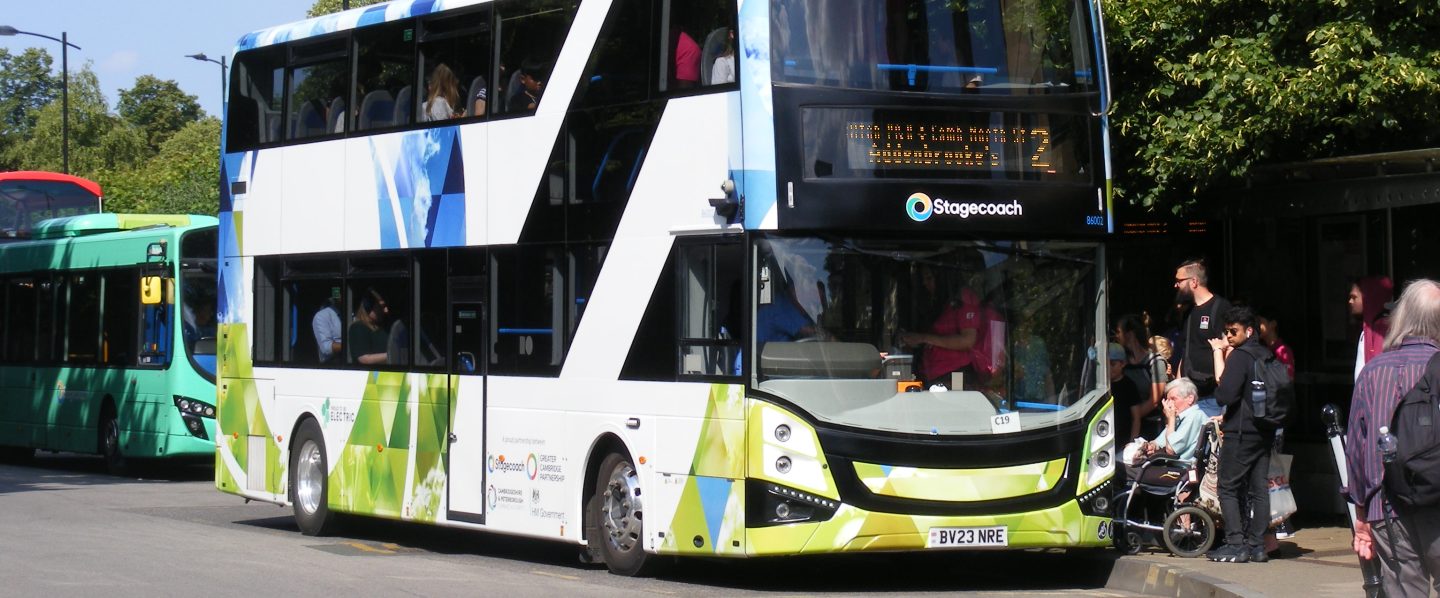
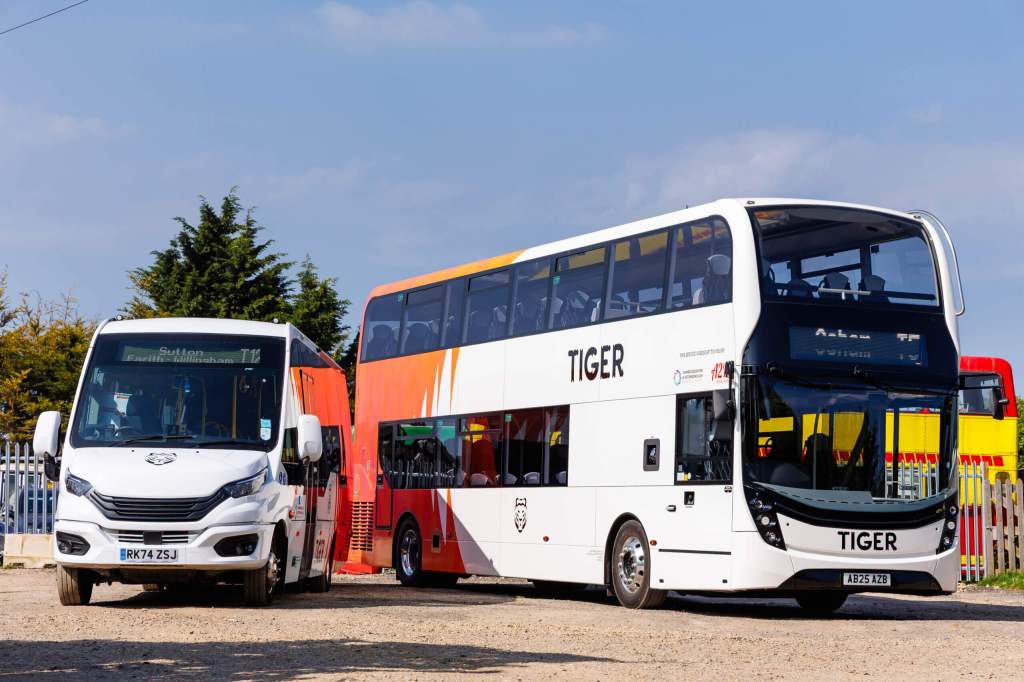
Image from Cambridgeshire and Peterborough Combined Authority of two buses in the 'Tiger' colours.

The Mayor’s decision to freeze the Mayoral Council Tax Precept has led to a significant change in the financial assumptions underlying the original franchising business case. The previously planned Mayoral Precept increase for an average Band D household from the current 10p/day to 16.5p/day by 2032 and 20p/day in 30 years time is much lower than the amount of Council Tax currently levied by the Police and Crime Commissioner (86p/day), and by the Fire Authority (25p/day). It is also lower (in some cases much lower) than many parish precepts: South Cambridgeshire’s parish precepts, for example, are currently as much as 53.5p/day (Great Shelford) with a South Cambridgeshire average of 26.5/day.


Cambridge Area Bus Users collaborated with Cambridgeshire Sustainable Travel Alliance to produce a guide to the Combined Authority’s Bus Franchising Supplementary Consultation

The full guide can be found on the Travel Alliance website: Consultation guide – Don’t miss your chance to call for more investment in buses.

How many stops before I get off?

If you’ve been travelling by bus in and around Cambridge recently, you should have noticed more buses announcing and displaying the next stop.


Under the Public Service Vehicles (Accessible Information) Regulations 2023, bus operators across Great Britain are now legally required to provide both audible and visible next-stop and route information on all local buses. This is a win for accessibility, making bus travel in the Cambridge area more reassuring for visually or hearing-impaired passengers, tourists, and everyday commuters alike.

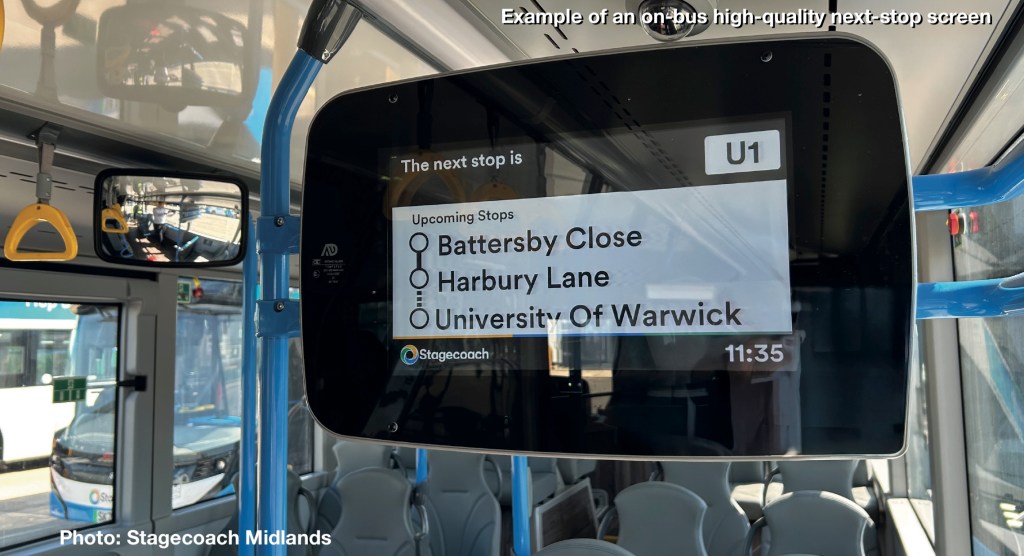
Example of an on-bus high-quality next-stop screen displaying
Route: U1
Upcoming Stops
Battersby Close
Harbury Lane
University Of Warwick
Time: 11:35
Photo credit: Stagecoach Midlands
Not all screens will be as good as this!

  • The regulations do not apply to demand-responsive transport services, such as Tiger-On-Demand, because it is impractical when the route and stopping places are not pre-defined.
  • Services operated by minibuses (vehicles designed to carry 16 or fewer passengers) are exempt from providing accessible information.

Here is Cambridge Area Bus Users‘ focus:

Although the law is now in full effect, equipment isn’t helpful if it’s muted, switched off, or glitching. We will be actively monitoring services across local bus operators. If you’ve travelled on a bus with faulty or inactive audiovisual announcements, please report it to the bus operator. See our Information: Operators page for contact details. Whenever possible email the operator and copy us in to the email on contact.cabu@gmail.com.

As Greater Cambridge heads toward a franchised bus network, basic next-stop announcements should only be the starting point. We want to see rich, contextual passenger information – especially at key hubs. Imagine hearing:

Next Stop: Addenbrooke’s Hospital. Interchange here for Route 13 towards Linton/Haverhill and Route 7 towards Sawston.

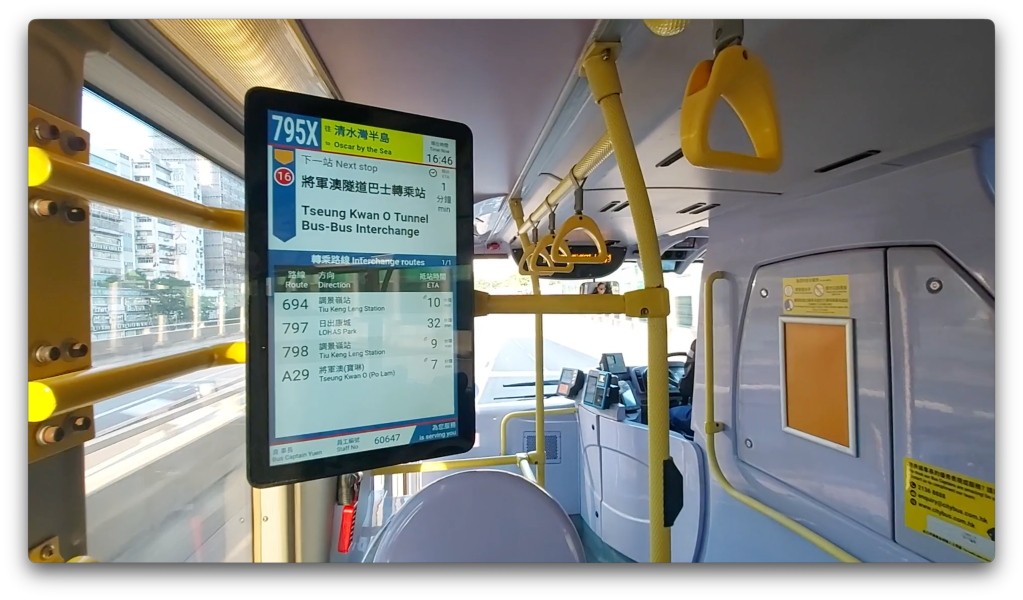
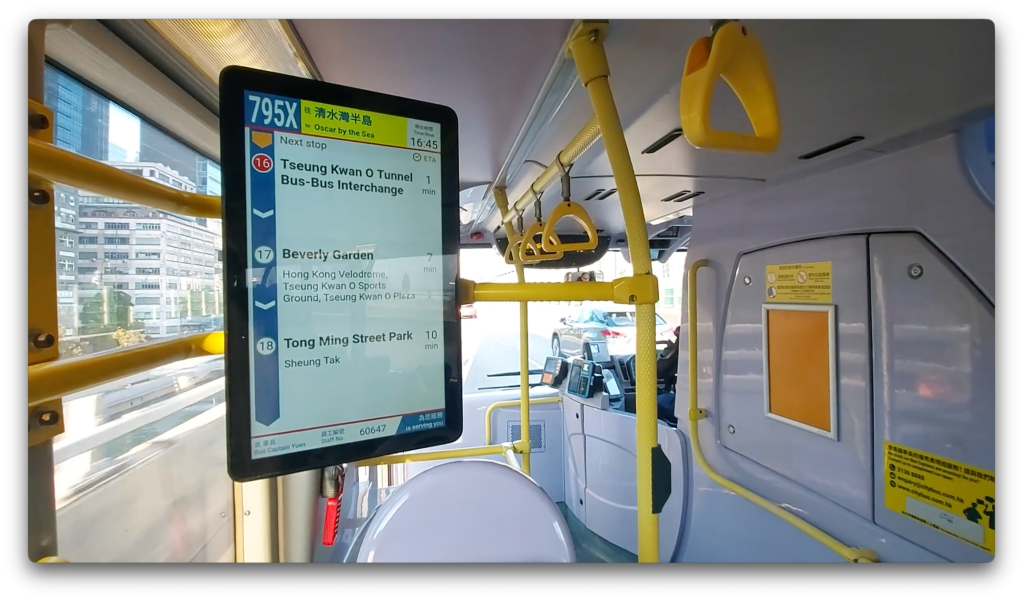
Why stop at static announcements? Some systems around the world are starting to adopt dynamic onboard displays that show live real-time arrival countdowns for connecting services at upcoming interchanges. (See this slideshow from Hong Kong.) We believe the Cambridge area – world renowned for its technological expertise – deserves similar forward-thinking changes as part of the Cambridgeshire and Peterborough Combined Authority’s bus franchising vision.


Have they been working well, or are there routes where compliance is falling short?

You are welcome to help us compile data to monitor compliance, using this email link: Bus AV Announcement Compliance. Note, however, that we cannot take up complaints on your behalf. For more information, see our Making a Complaint about Bus Services page.


Combined Authority Bus Network Review

Cambridgeshire and Peterborough Combined Authority recently undertook a public consultation on what they described as a “Bus Network Review” (PDF). Note this “consultation” is now closed.

Cambridge Area Bus Users could not really see the point of spending time and money on these short-term changes, which simply replace one set of partly-unsatisfactory routes and times with a set that’s marginally improved, but which remains straitjacketed by the need to avoid conflicting with “commercial” services. So the revisions don’t necessarily make problems go away, and they won’t until we have franchised services that can combine sections from the current “commercial” and “supported” sectors into one meaningful county-wide network. See our explainer on Franchising.

The Bus Users’ group has been very concerned, for some time, by the limited promotion of Cambridgeshire and Peterborough Combined Authority-supported bus services. This directly links to the use (and, therefore, viability) of these services. This consultation, similarly, did not appear to be directly promoted to the bus passengers it is going to affect (eg at key bus stops).

It’s unfortunate – but not unexpected – that the Combined Authority’s concept of a “bus network” extends only to routes and timetables. The continued lack of through fares where connections are to be made (even when these are all under CPCA control) and the continued exclusion of some services from the Multibus* scheme – even when they’re operating Cambridgeshire and Peterborough Combined Authority-supported services (you would expect signing up for Multibus to be a contractual requirement) – rather diminishes the concept of a “bus network”. Apparently ticketing isn’t thought of as an element of the “bus network”. It definitely is by passengers!

*Some information on the Multibus scheme is available on the hard-to-find TransportCPCA » Home » Buses » Bus tickets page.

Read/download Cambridge Area Bus Users’ response to the Combined Authority Bus Network Review (PDF).


Hi there,

I hope this email finds you well.

Thank you for signing up to receive updates on the Bus Network Review engagement.

The public engagement has now closed, and we’d like to thank everyone who took the time to share their views. We received over 1,000 responses from residents across Cambridgeshire and Peterborough, providing valuable feedback on the proposed changes to local bus services.

We are now carefully reviewing all of the feedback. This will help us refine the proposals before they are presented to the Combined Authority Board in September.

No decisions have been made at this stage. Members of the Combined Authority Board will consider the revised proposals before deciding on any future changes to the bus network.

We’ll continue to keep you updated as the project progresses and will let you know once the Board has considered the proposals.

Thank you again to everyone who took the time to get involved. Your feedback will play an important role in helping shape the future of local bus services across Cambridgeshire and Peterborough.

Kind regards,
Communications Team
consultations@cambridgeshirepeterborough-ca.gov.uk
Tel: 01480 277180


A summer timetable on Whippet’s Universal routes

Between 29 June and 30 August, Whippet will be running a revised timetable on its Universal routes, U1 and U2. And the reason for this summer timetable? The operator is taking advantage of reduced traffic congestion during the summer months to speed up journey times. Yes, if you can reduce congestion on the roads, then buses will run faster and more people will get more quickly to their destinations. Enjoy it while it lasts!

The Universal summer timetable can be downloaded here.

Postscript

The effect of congestion on bus services was succinctly explained to the Cambridgeshire and Peterborough Combined Authority Transport Committee…

I can give you a good example from Professor David Begg who calculated for London [TfL buses] that the shortfall between revenue and cost was roughly equivalent to the cost of congestion.

That is to say if you removed the congestion, you would do what 9,000 buses currently do with about 5,000 buses […] Because they would move more quickly, the service would be more attractive, more people would use them […]

And I can’t highlight enough that […] one of the reasons why there is a decline […] But a key one is the unattractiveness of the speed of the service, because in some urban areas, frankly, bus speeds drop below walking pace, because when you get down to four miles an hour, you can walk it anyway and, secondly, it’s unattractive and people are making other sorts of journeys and doing things differently.

So bus priority and bus speeds is a key element in making the service more attractive […] in […] areas where the bus gets priority […] the beautiful sight of the bus running up the inside of a lane of stationary cars is not lost on the occupants of the cars […]

[Leon Daniels OBE, presenting the Independent Review of Implementation Pathways for Bus Franchising Scheme to Cambridgeshire and Peterborough Combined Authority Transport Committee, 17 June 2026]

View the Agenda reports pack for full details of the report. The webcast of the meeting can be found on the Transport Committee, 17 June 2026 page. Leon Daniels speaks on the subject of congestion from around 3hr 16 min.